The Business Case for Retention-Focused Training
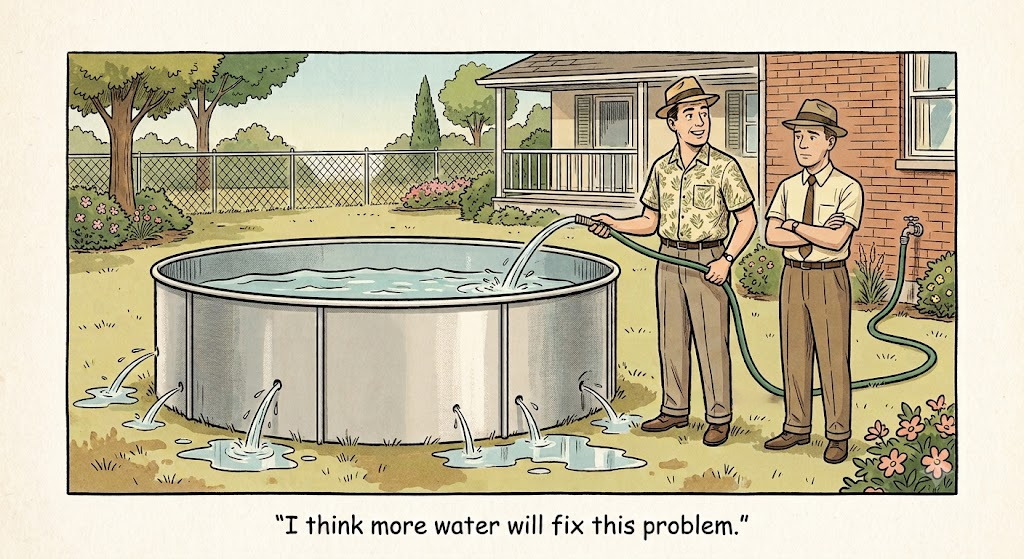
In our current AI-fueled environment of constant change, capability decay is a hidden risk. When learning fades faster than the business evolves, performance gaps widen. Organizations that treat learning as an ongoing capability rather than a one-time intervention are better positioned to adapt, execute, and grow.
With stats like only 5% of companies create value from AI at scale and 70% of AI implementation challenges are a result of people and process, then from a CEO’s perspective, retention-focused training is not merely an L&D initiative. It is a critical business strategy.
From a CEO’s perspective, the question is rarely just whether learning matters. The real question is whether learning translates into performance. Organizations invest heavily in training because they believe capability drives results. But too often, that investment is judged by activity rather than impact. Programs are launched, sessions are delivered, and participation is tracked, yet leaders still struggle to see clear evidence of change.
The issue is not belief in learning. It is confidence in return.
Why training ROI remains elusive
Most training initiatives are evaluated close to the moment they occur. Satisfaction surveys, completion rates, and short-term knowledge checks dominate reporting. From an executive standpoint, these metrics are not wrong, but they are incomplete. They describe effort, not outcome.
What leaders need to know is simpler and harder at the same time.
Are people performing better because of this training?
Are they getting to proficiency faster?
Are costly mistakes being reduced?
Without answers to these questions, training remains a leap of faith.
Small gains scale quickly
At enterprise scale, even modest improvements compound. A one or two percent improvement in time to competence across a large workforce can translate into millions in recovered productivity. Faster ramp means employees contribute sooner. Better retention reduces rework, errors, and supervisory burden. These are not abstract benefits. They show up in operating metrics leaders already care about.
The challenge is that these gains only materialize when learning is retained and applied. Exposure alone does not move the needle.
Retention, reactivation, and application as strategic levers
Retention-focused learning shifts the economics of training. When learning is reactivated and employees remember what they learned, they rely less on support. When they apply it consistently, performance stabilizes. When managers can see change, confidence in the investment increases. This creates a virtuous cycle. Learning becomes a performance accelerator rather than a cost center.
From a leadership perspective, the question becomes which learning investments deserve to be scaled, not whether learning should be funded.
Why validation matters at the executive level
One of the biggest barriers to trusting training ROI is reliance on self-report. Employees may believe they are applying what they learned. Leaders need confirmation that behavior actually changed. Manager validation plays a critical role here. When supervisors baseline expectations and later confirm observable improvement, training outcomes become credible. Impact moves from perception to evidence.
This kind of validation aligns learning with the operational reality of the business.
Turning learning into a performance system
For CEOs, the most compelling learning strategies are those that behave like systems rather than events. Systems reinforce critical behaviors over time. They create feedback loops. They surface insight that informs decision-making. Retention-focused training does exactly this. It extends learning beyond the session, connects it to real work, and provides visibility into what is working and what is not.
At elevator9, the focus is on helping organizations build this kind of system around the live training they already invest in. The goal is not to replace training, but to ensure it delivers durable value.
When learning lasts, performance follows.