Liftology: Episode 2
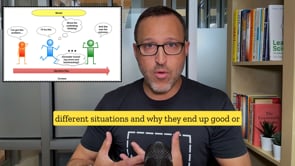
It’s a common thing to hear folks talk about using behavior science to create nudges. But are nudges really that useful? What differentiates times for nudges, and when you want, and need, LIFTs (our label - Learning Interventions Fueling Transformation)? Here’s our way of thinking about them.
Nudges are great…when you want to shift behavior. If you want to have a different behavioral response to the same stimulus, such as stopping cravings for cigarettes, they’re the thing you want. They’re designed to affect a single type of response. They’re set up to change your response to a specific type of trigger. Which is really useful…when that’s what you want and need to achieve. If you want something different, you may need to consider a different concept.
So, what many learning interventions are designed to achieve is a sustained new capability. That is, a flexible assessment of the situation and an application of the appropriate model as determined by matching a model to a situation. Thus, we’re looking at providing appropriate practice across different contexts. You don’t know what you’ll be seeing, but it’ll match a framework that gives you the parameters of a response, but you’ll have to recontextualize in the moment. It’s not just saying “no” to an offer, it’s determining when and how to respond. It’s for developing a new ability to do, not just change a way you react.
Ok, this may be a continuum, but most organizational trainings are about skills, not responses. It’s about assessing a situation and determining how you’ll respond. It’s not just change your response. So, for instance, it’s not just detecting a case of bullying, but determine whether you’ll intervene or just report, and how you’ll do that.
When you do need a significant skill shift, you will not only need to learn over old ways of acting, but you’ll have to learn how to assess the situation, and determine an appropriate course of action. That comes from repeated practice, both created, and then guided in real time. That’s what LIFTs are for, aggregated quick prompts, spaced over time, designed to develop an ability, not change a behavior.
While nudges have their place, so too do LIFTs. They’re different, in our mind, and consequently worth discriminating between them and knowing how and when to use the latter. Our suggestion is that when you need to reskill or upskill, it’s about LIFTs, not nudges. So, make sure you know what change you need, and then use the appropriate approach, eh?
This is the next in a series of posts that reflect the Liftology videos we also did on this topic. This post itself is a prompt, and the series of posts are a course in learning science. We invite you to follow along as we go through the background of effective learning experiences.